
Ciutan Family History & Genealogy
Ciutan Last Name History & Origin
AddSummary
Ciutan e un nome non molto frequente di statistica sulla ricerca etimologica ,il chè mi fa ritenere che ha radici antiche e nobili.Il nome Ciutan apare come nome di un fiume cinese"Tchou- tan(Ciu-Tan) river Cina wich runs into the Yuen,near Hong -Kiang-se"Joseph Emerson Worcester - 1823 - Geography ,fiume o porto dalle mape e carte nautiche della regione di Java e Indonesia-"Ciutan Larantuka",nelle Filippine, o il nome di un parco in Ohio- America. (Translation: "Ciutan is not very common surname and research leads me to believe that has ancient roots in nobility. Ciutan appears as the name of a Chinese river and as the name of a park in the state of Ohio, in America." Original text in Italian) A Ciutan family researcher has found connections to Italy, Spain, and northern Africa for the Ciutan family but no definitive answers about the surname Ciutan and about the history of the family have yet been shared.
History
-pg 176
dagli annali storici della repubblica di Venezia. Jtciii iid hnsiiednJ Strava- Ciutan 221-cap o pg; voce capitano borgo- paragrafo ,t 3 Ciutan Radutovicb . ..
Translation: The surname "Ciutan" appears in the historical annals of the republic of Venice. To wit: Ciutan - page 221; voice village captain-paragraph, t 3: Ciutan Radutovicb).
The implication is that the Ciutan family was in Venice several hundred years ago and may have originated there.
Ciutan e un nome non molto frequente di statistica sulla ricerca etimologica ,il chè mi fa ritenere che ha radici antiche e nobili.Il nome Ciutan apare come nome di un fiume cinese"Tchou- tan(Ciu-Tan) river Cina wich runs into the Yuen,near Hong -Kiang-se"Joseph Emerson Worcester - 1823 - Geography ,fiume o porto dalle mape e carte nautiche della regione di Java e Indonesia-"Ciutan Larantuka",nelle Filippine, o il nome di un parco in Ohio- America. (Translation: "Ciutan is not very common surname and research leads me to believe that has ancient roots in nobility. Ciutan appears as the name of a Chinese river and as the name of a park in the state of Ohio, in America." Original text in Italian) A Ciutan family researcher has found connections to Italy, Spain, and northern Africa for the Ciutan family but no definitive answers about the surname Ciutan and about the history of the family have yet been shared.
Name Origin
One version of the Etymology of the surname Ciutan:
Fonte-
" The tree lords of Xochimilco and the four rulers of Cuitlahuac had their own domains within the towns( *69 "Gibson ,The Aztec under Spanish Rule, pp.41-2") and the Maya settlement of Ciutan(Tabasco) can be considered either as a single town with three subdivisions or as three separate but adiacent towns. (*70-"Scholesand Roys, The Maya Chontul Indians.....pp.97-8")
-Fonte: Il diario -ottavo giorno-www.giovannibertini.it Il nome deriva da "ciù tan" che é la risposta alla domanda che i conquistatori spagnoli hanno fatto agli indigeni quando sono sbarcati: "come si chiama questo luogo?" "ciu tan (non capisco). ( The name comes from "ciù tan" which is the answer to the question that the Spanish conquerors have done to the natives when they landed, "as you call this place?" "ciu tan (do not understand).
-Fonte: - Yuanqiu Tan (Altare Circolare) detto anche il "altare del cielo"
yuan in romeno si pronuncia Ioan.
Yuanqiu Tan (Altare circolare): costruito nel 1530. E’ composto da 3 terrazze circolari in marmo bianco, delimitato da balaustre: la terrazza dell’uomo, della terra e del cielo. Il numero 9 e i suoi multipli, simbolo del Cielo e dell’Imperatore, si trovano nella disposizione dei blocchi di marmo e delle scale. Infatti alle terrazze si giunge attraverso tre rampe di scale di 9 gradini ciascuna; allo stesso modo, i blocchi di marmo della piattaforma superiore sono stati disposti in cerchi concentrici formati da nove, poi da 18 e cos� di seguito fino a 81 piastre. I pilastri delle balaustre delle terrazze sono 360 e stanno a simboleggiare i giorni del calendario lunare cinese. Sull’Altare circolare l’imperatore compiva i solenni sacrifici.
Temple of Heaven (Tiantan Park)
Originally the Temple of Heaven had only one main gate, which faced west, but after it was made a public park in 1949, entrances were also opened on the northern, southern and eastern sides. The Bridge of Cinnabar Steps (Danbiqiao), a 360-meter-long stone walkway, connects the main architectural structures of the temple-the Hall of Prayer for a Good Year (Qiniandian) to the north and the Hall of the Imperial Heavenly Vault (Huanqiongyu) and the Altar of Heaven (Huanqiu) to the south.Ciutan anagrammato= TICUAN -regione nelle Filippine ()
TAN -dal cinese corrisponde a :Sight;Chant;Extol;Charcoal;Marvel at ..
An alternate hypothesis of the etymology Ciutan name: (in Italian)
Etimologia nome Ciutan :
PUȘTI(reg., Dobrogea)= in romeno significa bambino(a) monello.in inglese-lively brat
ciut (ciútă), adj. – 1. Cu coarnele tăiate, fără coarne sau fără un corn. – 2. Cu urechile tăiate, fără urechi sau fără o ureche. – 3. (Animal) care are coarnele sau urechile foarte mici. – 4. (Trans.) Greoi, neîndemînatic. – Var. șut, ciut, megl. ciut. Creație expresivă, ca ciot „ciuntitură” și bot „rît; cioc” (cu der. bont „tocit” ca ciunt). Cf. it. ciotto „șchiop”, a cărui origine este necunoscută după Prati 287. Este cuvînt comun aproape tututor limbilor balcanice (alb. šut, šüt, bg., sb. šut, mag. csuta, suta, ceh. šutá, pol. szuty, rut. šuta, toate cu sensul de „fără coarne”), fie că este vorba de formații expresive independente, fie de împrumuturi din rom. Totuși opiniile asupra originilor cuvîntului rom. sînt împărțite. Cea mai curentă este cea care îl derivă din alb. (Meyer 420; Philippide, II, 707; Capidan, Dacor., I, 512 și II, 550; DAR); pentru a rezolva dificultatea ridicată de fonetism, s-a apelat la (Capidan) la explicația care pornește de la forma alb. articulată të šut. Această ipoteză nu este imposibilă, însă nu este folositoare, în lumina tuturor rădăcinilor expresive rom., care indică, prin aceleași mijloace, aceeași noțiune. După Cihac, II, 59, ar trebui pornit de la bg. După Pascu, I, 194, de la un lat. *tiutus, din gr. τυτθός și după Giulgea, RF, 49, din lat. exutus „scos, luat”, ipoteze forțate și neinteresante. Cf. Rosetti, II, 114. Aceeași rădăcină prezintă și o var. cu infix nazal, ciunt, adj. (mutilat; ciung; se spune despre oamenii, animalele sau obiectele cărora le lipsește un membru sau o parte), pentru a cărui formație cf. paralelismul lui bot și bont, ciont și probabil cioc și ciung; cf. și it. cioncare (calabr. ciuncari) „a mutila”. Der. ciunti (var. ciunta), vb. (a tăia, a reteza, a amputa, a tăia crengi); ciuntitură, s. f. (acțiunea de a reteza; membru sau parte retezată); ciută, s. f. (căprioară; animal sălbatic, fiară), pe care Capida, Dacor., I, 512 și II, 550 și DAR îl derivă direct din alb. të šute „ciută”; ciutărie, s. f. (parc rezervat pentru creșterea cerbilor); ciutac (var. ciutan, ciutaș), s. m. (nume de bou); ciutit, adj. (fără coarne).
- variante del accostamento della radice del nome Ciut in lat. *tiutus, e dal gr. τυτθός= padre, paulus, tata, etc
- variante del accostamento in gr :Xanthòs e Xoutòs- “biondo”, o -Pyrrhòs “fulvo” e Chrysoeidés “aureo”, riferiti ai capelli di uomini o Dei.Che Xanthòs significhi veramente “biondo” è rilevabile da Pindaro che chiama Xanthos il leone, Bacchilide il colore del grano maturo (III, 56) mentre Platone nel Timeo (68 b) ci spiega che Xanthòs (il giallo) si ottiene mescolando “lo splendente col rosso e col bianco” e Aristotele (Dei colori, I, I) afferma che il fuoco e il sole van detti Xanthòs(=Similitudine col Sothis).Secondo Pindaro -Apollo è Phoibos “luminoso, raggiante” e anche Xoutòs (=Csiutos); secondo Esiodo -" Non rari i nomi Xanthòs, Xuthìas, Xanthà, come anche Phyrros “fulvo” (da pur = fuoco). Xuthias;Xantos=Sothis( ) e un altra fonte-
-Variante del accostamento della radice Tchou(= Ciu?) in lingua cinese significa: signore
Suffisso Tan=
(trigonometry) A symbol of the trigonometric function tangent.From French tan (“tanbark”), from Gaulish tanno (“live oak”) (compare Breton tann (“red oak”), Old Cornish tannen), from Proto-Indo-European *dʰonu (“fir”) (compare Hittite [script?] (tanau, “fir”)[script?], Latin femur, genitive feminis (“thigh”), German Tann (“woods”), Tanne (“fir”), Albanian thanë (“cranberry bush”), Ancient Greek θάμνος (thamnos, “thicket”), Avestan [script?] (θanwarə), geitive [script?] (θanwanō, “bow”)[script?], Sanskrit धनुस् (dhánus), genitive [script?] (dhánvanus, “bow”)[script?]). Verb from Middle English tannen, from late Old English tannian (“to tan a hide”), from Anglo-Norman tanner, from tan.
fonte :
Suffisso AN- negli vari sintagmi ieratiche delle varie lingue=" venuti dal cielo ".
Le iniziali AN lette in chiave palindroma , corrispondono ad= ATOM NOI(= ION ATOM =IO TAN OM,....etc) oppure Astro Nave( =Sat , Ro(OR) ,Nave,SATOR AVEN ...hahahah ....etc).
Opere edite e inedite - Volume 4 - Pagina 39 - Risultati da Google Libri
books.google.it/books?id=WYxJAAAAcAAJ
Cesare Lucchesini - 1832
-Tan (たん), Chin (ちん), Rin (りん) nei suffissi giapponesi: storpiature infantili derivanti dal chan, raramente utilizzate da bambini più grandi; persino fra adulti possono avere connotazioni ironiche o vezzeggiative esagerate; chan (ちゃん?): utilizzato come vezzeggiativo, propriamente verso i bambini con i quali nel linguaggio occidentale corrisponderebbe all'appellativo "piccolo/a" o ad un diminutivo (es. Carletta, Luigino). Può però (ed è diffusissimo in tal senso) essere utilizzato anche fra persone adolescenti o adulte e in questi casi indica forte amicizia e confidenza, come per esempio fra amiche di scuola, ma può indicare anche affettuosità e un certo grado di intimità, come fra coppie o fra parenti più grandi verso parenti più piccoli (es. la madre al figlio).Viene utilizzato anche per gli animali domestici. Il -chan può essere usato anche dopo un'abbreviazione del nome.
-Taneto (Gattatico, Re). Forse si tratta dello stesso vicum (villaggio) di Tannetum localizzato da Tito Livio (XXI, 25, 13) sulle rive del Po. Il nome potrebbe derivare dal gall. tanno- ʿleccioʾ, da cui il significato di ʿluogo dei lecciʾ; cfr. il toponimo Tannay (Ardennes, Nièvre) < *Tannetum, il br. tannen ʿrovereʾ e glastannen ʿleccioʾ, l'a.corn. glastannen ʿquercus uel ilexʾ (e forse l'a.irl. tinne ʿagrifoglioʾ) (X. Delamarre). È stato inteso anche come ʿil (luogo) lungoʾ, *tan-eto-, cfr. a.irl. tanae ʿsottileʾ (P. de Bernardo Stempel) e come ʿLuogo dei fuochi?ʾ, da *tanet-, cfr. a.irl. tene ʿfuocoʾ < *tanets, br. tan ʿfuocoʾ (G. R. Isaac). [I]
"il lugo dei faggi e le querce"= "( locul stejarilor si fagilor)"
Toponimi celtici d'Italia:it.wikipedia.org/.../Toponimi_celtici_d'Italia:_i_poleonimi_localizzati
Ciutan Park, OH
Latitude: 39.3678365 Longitude: -84.299661
County: Warren
Area: Mason
TAICUN( CIUTAN) località in China=
Spellings & Pronunciations
No variations for the spelling of the Ciutan family have yet been shared.
Anagramma del nome Ciutan= IUCTAN( IU-CTAN);CIT UAN(= CITY ONE);NAUTIC;NATU IC( HERE IS BORN);CUANTIC; ATUN-CI( ATUN IS);TUNICA(TU-NIA-C) ;NIU- CAT;NIU-ACT( NEW ACT !);INU -CAT;NUI -CAT( AREN'T CAT ) ;TIANUC(=TIANUS;TIA SUN);TICUAN;UNITA-C;IT-CAN-U(IS SAN U= THIS SUN;YOU USE SUN) ;ICT- ANU(EAST ANU;STAR ANU );CUINTA(=V);ANTICU;A-CTI-NU;NUT-ACI( HERE NUT);UNA-CIT(ONE SITE);UNCIA-T( UNICA- T= UNIC YOU;RARE);CAN-TIU; TUN -ACI(THUNDER HERE!-Tuono qui );TANC IU=(TANK YOU= strong you ; THANK YOU);CTAI -UN(=CTAI ONE- meaning the superior or boss); STA UNO;SUTANI;CUTIAN;NUTAIC;CUNIA;AITUNC;CATUNI-località( in romană cătun n. subdiviziunea unei comune, sat mic. [Albanez KATUN, sat; sensul primitiv pare a fi fost «locuință ciobănească, stână», ca și al sinonimului său sat]. ;CUNTAI-località;TUCINA-Localita in Yucatan .
Nationality & Ethnicity
il paese d'origine e la Romania At least one branch of the Ciutan family is Italian.
Famous People named Ciutan
Ciutan Constantin e stato uno dei ing geometri che hanno eretto Hotel Intercontinental; costruito Teatro National of Bucharest;
"Medalia Virtutea Militara de Razboi clasa II-a -Caporalului t.r Ciutan Ioan-sursa:Monitorul _oficial_al_Romaniei_Partea_1_1945-09-18,_nr._212.pdf
Early Ciutans
These are the earliest records we have of the Ciutan family.
Ciutan Family Members
Ciutan Family Photos
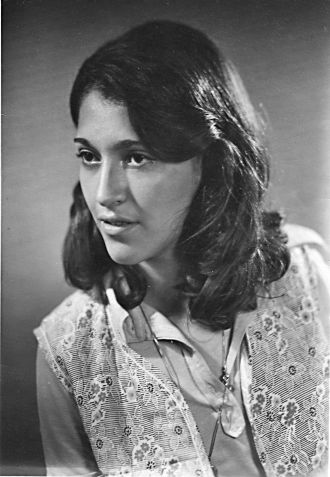
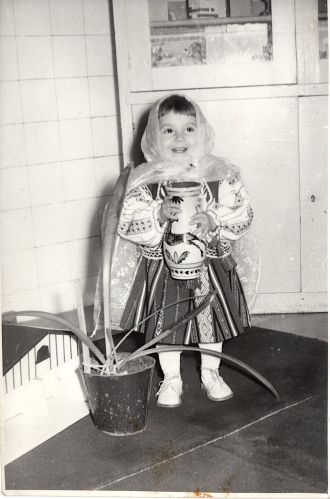
Discover Ciutan family photos shared by the community. These photos contain people and places related to the Ciutan last name.


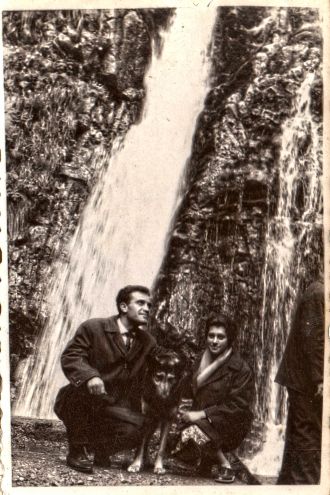
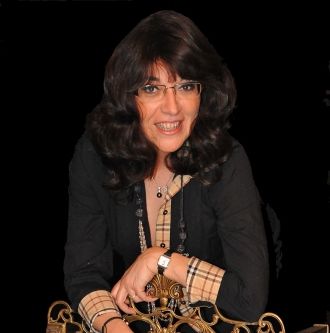

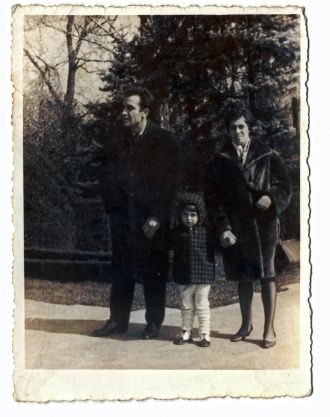
People in photo include: Constantin Ciutan




People in photo include: Marian Ciutan

People in photo include: Ioana Ciutan

People in photo include: Ioana Ciutan
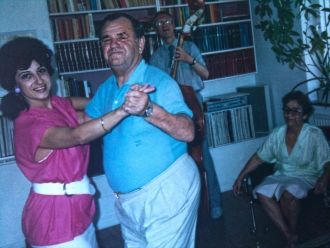







Sursa: DER (1958-1966)
|
- variante del accostamento della radice del nome Ciut in lat. *tiutus, e dal gr. τυτθός= padre, paulus, tata, etc
-variante del accostamento dal greco -"Lo stesso progenitore degli Ioni e degli Achei sarebbe stato Xoutòs, “il biondo”, fratello di Doro e figlio di Elleno, mitico capostipite della stirpe greca. Che xanthòs significhi veramente “biondo” è rilevabile da Pindaro che chiama xanthos il leone, Bacchilide il colore del grano maturo (III, 56) mentre Platone nel Timeo (68 b) ci spiega che xanthòs (il giallo) si ottiene mescolando “lo splendente col rosso e col bianco” e Aristotele (Dei colori, I, I) afferma che il fuoco e il sole van detti xanthòs.Anche secondo Esiodo- Non rari i nomi Xanthòs, Xuthìas, Xanthà, come anche Phyrros “fulvo” (da pur = fuoco) _" Xoutòs;Xutias(similitudine con Sothis?-Sothis Antico nome greco-egizio della stella Sirio. Il periodo (o anno) sotiaco era l’anno astronomico degli antichi Egizi che aveva inizio dal sorgere eliaco della stella Sirio.-http://www.treccani.it/enciclopedia/sothis/ )-
-Variante del accostamento della radice Tchou(= Ciu?) in lingua cinese significa: "signore"-Opere edite e inedite - Volume 4 - Pagina 39 - Risultati da Google Libri
books.google.it/books?id=WYxJAAAAcAAJ
Cesare Lucchesini -1832
-Tan (たん), Chin (ちん), Rin (りん) nei suffissi giapponesi: storpiature infantili derivanti dal chan, raramente utilizzate da bambini più grandi; persino fra adulti possono avere connotazioni ironiche o vezzeggiative esagerate; chan (ちゃん?): utilizzato come vezzeggiativo, propriamente verso i bambini con i quali nel linguaggio occidentale corrisponderebbe all'appellativo "piccolo/a" o ad un diminutivo (es. Carletta, Luigino). Può però (ed è diffusissimo in tal senso) essere utilizzato anche fra persone adolescenti o adulte e in questi casi indica forte amicizia e confidenza, come per esempio fra amiche di scuola, ma può indicare anche affettuosità e un certo grado di intimità, come fra coppie o fra parenti più grandi verso parenti più piccoli (es. la madre al figlio).Viene utilizzato anche per gli animali domestici. Il -chan può essere usato anche dopo un'abbreviazione del nome.
onesi
-Taneto (Gattatico, Re). Forse si tratta dello stesso vicum (villaggio) di Tannetum localizzato da Tito Livio (XXI, 25, 13) sulle rive del Po. Il nome potrebbe derivare dal gall. tanno- ʿleccioʾ, da cui il significato di ʿluogo dei lecciʾ; cfr. il toponimo Tannay (Ardennes, Nièvre) < *Tannetum, il br. tannen ʿrovereʾ e glastannen ʿleccioʾ, l'a.corn. glastannen ʿquercus uel ilexʾ (e forse l'a.irl. tinne ʿagrifoglioʾ) (X. Delamarre). È stato inteso anche come ʿil (luogo) lungoʾ, *tan-eto-, cfr. a.irl. tanae ʿsottileʾ (P. de Bernardo Stempel) e come ʿLuogo dei fuochi?ʾ, da *tanet-, cfr. a.irl. tene ʿfuocoʾ < *tanets, br. tan ʿfuocoʾ (G. R. Isaac). [I]
Toponimi celtici d'Italia:
it.wikipedia.org/.../Toponimi_celtici_d'Italia:_i_poleonimi_localizzati..
Ciutan apare come nome di un fiume cinese,fiume o porto dalle mape e carte nautiche della regione di Java e Indonesia-"Ciutan Larantuka",nelle Filippine, o il nome di un parco in Ohio- America. (Translation: "Ciutan is not very common surname and research leads me to believe that has ancient roots in nobility. Ciutan appears as the name of a Chinese river and as the name of a park in the state of Ohio, in America.
"1:50000, CMP / 500F29C, CIUTAN LARANTUKA, UPDATED.
ww1.jeppesen.com/.../gb/.../coverage.jsp?..
1:25000, CMP / 330714P, PELABUHAN BUHIAS DAN CIUTAN RUANG ... philippines - C-MAP Chart Catalogue - NT MAX Chartlisting
KALIMANTAN AND SULAWESI - Jeppesen.....1:25000, CMP / 500D75D, CIUTAN PADANG, UPDA
-Original text in Italian) A Ciutan family researcher has found connections to Italy, Spain, and northern Africa for the Ciutan family but no definitive answers about the surname Ciutan and about the history of the family have yet been shared.
Bălaşa apare in annalele storice Ju. Venelin, din anul 1840 -" Vlaho-bolgarskija ili dako-slavjanskija gramoty"- ( gramatica şi storia Vlaho-bulgară -daco-slavonică) in pag 342 al doilea nume scris cu litere cirilice in partea sx in sus. Sursa informatie
Balasa -Nome di un fiume in Africa tra Eritrea e Etiopia.()
the confluence of the Balasa with the Mareb at
WikiMiniAtlas
14°38′N 39°1.3′E.
Balasa- Nome di un lago( Balasa Pokhri of Sikron Village) su un alto piano a 3,110 m in Nepal-
Balassa -località in Niger
Balasa is a Romanian name, the Greek-Albanian roots (I think the name comes from the root Greek Phanariot Balassaki-name already expanded during the Ottoman Empire) but may have roots even gave Antiche that is present in India, and Indonesia which makes me conclude that there are Pelasgian-Thracian Dacian roots, since Alexander the Great said Makedon (Alessandro Magno) Impression conquered an empire reaching the Far East (India and China).Balasa appeared like a name of a lake in Nepal nearest Kaigaon( similarity with Kogaion romanian sacred mountain?),other a name of the river Balasa (Africa) ,wich confluenced with Mareb river between Ethiopia and Eritrea.
Etimologia del nome Bălaşa,-bălaie(rom archaic); bionda ;Bianca(it);blonde;gold;refulgent(ing).Blanche(fr)
Derivanti della radice Bălaşa=Bălan(Romanian archaic)[[ significa -bianco;bianco -giallo; oro- e usato per le razze di cavalli]]
mean: white;yellow-white;yellow-golden- the terminology is used for the horses bred.
Bălaşa = (inglese). -Blonde, Golden Shining, Shining, glittering, glossy, glowing, refulgent, luminous, radiant, bright, gold
People in photo include: Ciutan, Ciutan, and Balasa

Ciutan Family Tree
Discover the most common names, oldest records and life expectancy of people with the last name Ciutan.
Updated Ciutan Biographies

Popular Ciutan Biographies
Other Ciutan Records
Share memories about your Ciutan family
Leave comments and ask questions related to the Ciutan family.
Followers & Sources