
Morrison Family History & Genealogy
Morrison Last Name History & Origin
AddSummary
The Scottish History of the Morrison Origins
“There was, not surprisingly, a certain coolness from some who felt their illusions had been shattered and some who had vested interests in ‘clanship’”.
Gordon Donaldson (1995) p 89.
I am a Scot, but what does it mean? Scottish people have evolved from an amalgamation of Picts (northern Scotland down to the borders), Gaels (Ireland and Western Isles and coast), Britons (from the south moving north across the border country) as well as Norse Vikings and Germanic peoples such as the Anglo-Saxons. Later on in history the Romans and Normans had a significant influence. Then there were the European traders who brought further ethnic mixes into the equation. Modern Scots are therefore like the crystals in a kaleidoscope, the more you turn the viewer the more the pattern changes.
There were periods in Scottish history when Norway held suzerainty over the Orkneys and the Western Isles, including the Hebridean Isle of Lewis. Perhaps the most fluid ethnic ebb and flow came across the lowland borders where successive waves of Angles, Romans, Normans and English swept into what is now Scotland attempting to either tame the “savages” or claim sovereignty.
So who were the Morrisons? Trying to find the definitive origin out of the blend of Scottish history and folklore is akin to playing the children’s game of apple dunking blindfolded (Apple dunking involves trying to pluck a floating apple from a tub of water with your teeth).
Many Morrison clusters have been identified throughout Scotland including Lewis/Harris, Sutherland, Aberdeenshire, Perthshire, Fifeshire, Midlothians and Clackmannanshire. There are strong associations in Ireland and England. Today the name Morrison is recorded as about the twentieth most common name in Scotland, and is prominently seen throughout the UK via the Morrison chain of supermarkets and fuel distributers which were established in Yorkshire by an English Morrison family.
This essay attempts to dispel the myth that all Morrisons come from a single source which is often cited in a clan society fable and commercial “the origin of the name” publications. It further demonstrates that the name Morrison itself is derived from many sources, that the idea of a “clan” is a commercial artifact, the history behind the Morrrison tartans has been embellished, and the present badge is a marketing concoction.
History
The Fiction of the Morrison Fable
Clan societies, particularly those founded overseas, have become something akin to cult groups. Reading modern literature one is forgiven for believing the Morrison “clan” is derived from a real event in the early 13th century of the history of Scotland. Folklore surrounding the origins of the Morrisons on the Isle of Lewis include this gushing account from the Clan Morrison website:
Eight centuries ago a Norse ship struggled in heavy seas off the Scottish island of Lewis. A proud Kintyre noblewoman named Lauon stood on deck cradling her newborn infant son, Gillemorrie, in her arms while her husband, Olaf the Black, shouted orders to the crew. Despite his Herculean efforts the ship foundered. Olaf, Lauon and their son plunged into the frigid waters and clung to a piece of driftwood near their sinking vessel. Fortune smiled upon the stoic trio, and they were deposited safe but wet upon the stony Lewis shore.
This fable is about an event that is supposed to have occurred about 1217 after Olaf’s [Olaf the Black, 1177-1237] half-brother Reginald granted him title to Lewis during the reign of Alexander 11 of Scotland. This account of the Morrisons of Lewis has fatal flaws that should be aired. The above fable has been copied relentlessly without any acknowledgement by Morrison societies and followers as though it was fact.
Whilst it is acknowledged that there is no definitive account of the reign of Olaf the Black a number of historians have examined the available accounts, particularly some who have investigated the origins of the MacLeods. One of the disputed theories about the origins of the MacLeods was that their lineage could be traced to Leod, son of Olaf the Black. Interestingly, not one of these scholars associated Olaf as having a son named “Gillmorrie”.
As a short digression some of the history of Olaf might be useful. When Olaf’s father Godred 11 (Godred The Black) died in 1187 the Kingship was passed to his illegitimate son Reginald because Olaf was only 10 years old. According to the Chronicon Regum Manniae (1158-1223), Reginald assigned Lewis to Olaf, but Olaf found it to be unsatisfactory and complained. Reginald had him imprisoned by the Scottish King William and it wasn’t until William died in 1214 that Olaf was released. He then went on a three year pilgrimage to St James of Compostella in the North of Spain.
This takes us to about 1217 and Olaf made peace with Reginald. According to Alick Morrison (1986) Olaf seems to have been married “before he was imprisoned in Scotland, to a ‘lady of Kintyre’, a cousin of the Queen of Man and the Isles [The Chronicon Regum Manniae suggests it was “Lanon”, the Queen’s sister]. According to Canon Roderick MacLeod, Leod, progenitor of the MacLeods, was a son of this marriage, in this particular, the Canon departs from MacLeod traditions (eg, Manuscript Memorial of 1767, the Talisker Manuscript and the Bannatyne Manuscript), which claimed that Leod was a son of Olaf’s third marriage with Christina, daughter of Farquar, Earl of Ross. Some time after his return to Lodhus [Lewis], Olaf decided to marry again in 1218 to ‘Jauon’ (ie, Joan) a sister of the Queen of Man. Reginald [the son of Olaf’s sister], the Bishop of the Isles, now took action and convening the Synod, demanded that Olaf must divorce his wife on the ground that she was cousin germain to his first wife. Olaf complained that his first marriage was not confirmed: Bishop Reginald was adamant: Joan had to go. In 1222, Olaf married his third wife, Christina daughter of Farquar, Earl of Ross, with issue four sons, Harold, Reginald, Magnus and Godfrey” (Godfrey died as a child).
MacKenzie’s (1903) detailed “History of the Outer Hebrides” makes no mention of Olaf having a troubled landing with his “illicit” bride Lauon (who Reginald had arranged). MacKenzie states that Olaf died in 1237 and left three sons, Harald (the eldest), Reginald and Magnus. (W C MacKenzie, History of the Outer Hebrides, 1903, pp 29-39). Again no mention of a “Gillemorrie”!
There is considerable debate amongst historians about Olaf, including one suggestion he had three wives (Alick Morrison, 1986) and many children, but all agree there was no “Gillemorrie”. Note also that the MacLeods originally claimed their decent through Olaf the Black from a child by Lauon named “Leod”. The McLeod history claims that Olaf was forced to “divorce” Lauon and marry Christina. Depending on which account you subscribe to, Lauon was a relative of Reginald’s Queen (either a sister or cousin), and the Queen attempted to have Olaf murdered by her son for the treachery against Lauon.
MacLeod (The Ancestry of Leod, 2000) cites the Manx Chronicle which names the four sons of Olaf noting there was no “Leod” (or for that matter, “Gillemorrie”) and writes that “By the end of the thirteenth century, legal claims to the Isle of Mann were being pursued on behalf of daughters of the family, implying that the (legitimate) male line from Olaf the Black was then extinct”. If this is the case then it further substantiates the proposition there was no Morrison male line that could be traced to Olaf the Black because if there was then the Morrisons would have had legal claim over the Isle of Man.
As for the Morrison plant emblem being driftwood (a direct reference to the fable), given the nature of the coastline, wrecks were common, and driftwood plentiful. The antiquaries manuscript of 1876-78 (Traditions of the Morrisons [Clan Mac Ghillemhurie] by Capt FWL Thomas) states ”I am told the that the badge of the Morrisons is ‘drift-wood’ of which a great quantity is driven upon the west coast of Lewis (p14)”, but there is no mention in his account of the Morrison traditions of the above fable. Rather than supporting the shipwreck story Thomas quite rightly makes the observation that because driftwood is so plentiful on Lewis it was natural to associate driftwood with the early Morrisons on Lewis.
One has to remember that a fable is not a fact, and stories about shipwrecks could be told about any number of similar incidents along Scotland’s rugged coastline. I have been unable to find any reference to who wrote the above fable about the shipwreck, but serious Morrison researchers would be well advised to keep to credible historical records and family documentation.
Captain Thomas (1876-78) quotes John Morrison of Bragar (also known as the “Indweller”) writing around 1678: “The first and most ancient inhabitants of this countrie [Lewis] were three men of three several reaces, viz, Mores, the sone of Kennanus, whom the Irish historians call Makurich, whom they make to be naturall son to one of the kings of Norovay, some of whose posteritie remains in the land to this day. All the Morrisons in Scotland may challenge their decent from this man.. (p5)”. The other two “reaces” Morrison refers to were Iskair Mac Aulay from Ireland and Macnaicle [MacNicol] who decended from the king of Norway. This is a fascinating account written by a Morrison who was so to speak, on the spot, but remember this was written in 1678, some 550 years after the fable was supposed to have occurred.
Thomas points out what he considers to be a curious omission in John Morrison’s account: “Of the Morrisons, it is strange that the ‘Indweller’, himself a Morrison should have ignored what he would have called the “Irish” name of his his clan, which is from Gille-Mhuire, ie, servant of Mary; from Gille, ie, a servant, & and More, ie, Mary. A Morrison in Gaelic is Mac Ghillemhuire, sometimes shortened to Gillmore, Gilmour; or translated Morrison, Maryson; or reduced to Milmorer, Miles or Myles. The Morrisons are numerous in Lewis, where, in 1861, they numbered 1402, or one-fifteenth of the whole population; in Harris there were 530, equal to one-seventh of the inhabitants (p7)”.
So we are left the intriguing incongruity: there was no child of Olaf named “Gillemorrie” and the “Indweller” claims Norse decent from “Mores”. The name “Gillemorrie” is of Gaelic origin. Therefore the conclusion has to be that there is no definitive origin to the Morrisons of Lewis, but somewhere in the mix there is every likelihood of some Norse genetic infusion into the Gael stock. The conclusion after examining the extensive academic debate is that neither the Morrisons or the MacLeods descend from Olaf the Black, yet there is a general uncritical acceptance by many writers that claim this Morrison origin.
There is one further Norse connection that is sometimes mentioned in the origins of the Lewis Morrisons and that is the reference to the 12th Century Norse-Gaelic warrior Somerled, self styled King of the Hebrides, who is said to have a connection to the MacDonald clan. There would appear to be little detailed research on this theory to warrant examination in this discussion paper.
Bain (The Clans and Tartans of Scotland, 1938, p240) wrote the Morrisons were of Norse origin and many were forced to flee Lewis in 1597 with up to 60 families relocating to the highland area of Sutherland in MacKay territory. Note that those Morrisons left on Lewis after the intervention of the “Fife Adventures” and Neill MacLeod’s treachery between 1598-1607 lost their entitlement to hereditary brieveship in 1613. Are we to believe that from this 1597 exodus that the Morrisons spread all over Scotland? Hardly.
After the founding of a Clan Morrison Society in 1909 it took until 1965 to elect a “Chief”. This went to a Morrison who was associated with the Harris Morrisons of Pabbay, and recognised by the court of the Lord Lyon as the rightful “clan” under John Morrison (Lord Ruchdi). What we therefore have is the acknowledgement of a family group whose geographic isolation on Lewis and Harris has made them distinctive, and quite probably sharing a common descent over a number of generations.
The Morrisons of Lewis and Harris fit the modern definition of a clan, defined as a unit “often consisting of several lineages in which common descent is assumed but cannot necessarily be demonstrated (Fox, 1967)”. However, David Moody (Scottish Family History, 1988) warns that “there is the problem that the clan system of today is primarily an invention of nineteenth-century romantics and astute businessmen bent on the exploitation of a myth (p99)”.
Moody’s cautionary warning is appropriate to the prevailing idea of a general clan Morrison. If you accept the idea of there being a clan Morrison then there is the requirement of a common descent. There is no common descent for the holders of the name Morrison. This fact is set out below as both a function of the many possible derivations of the name Morrison multiplied by the various geographical family clusters mentioned above.
This Morrison “clan” history has taken on a whole new persona since the Lord Lyon approval, embellished and decorated with all the trimmings of a Scottish tourist shop. It is backlit by the romantic vision of Scotland portrayed in the Waverley novels of Sir Walter Scott where larger than life clan chieftains stood proudly bedecked in tartan, claymore in hand, among the castle ruins and scenic lochs. More recently the filmic depiction by Mel Gibson of the heroic Sir William Wallace have given rise to a clan industry that plays on the more than 30 million people of Scottish origin living abroad. This is not to say that todays Scots themselves don’t enjoy the trappings of this romantic vision as witnessed by Highland gatherings, clan parades and Scottish national tartan fervour over international football fixtures.
The serious side is trying to determine what if anything apart from the name can unify all Morrisons, either by origin, tartan or badge. Everything that I have read and studied about Scottish kinship has cautioned me to approach the subject with a great deal of scepticism.
The Scottish History of the Morrison Origins
“There was, not surprisingly, a certain coolness from some who felt their illusions had been shattered and some who had vested interests in ‘clanship’”.
Gordon Donaldson (1995) p 89.
I am a Scot, but what does it mean? Scottish people have evolved from an amalgamation of Picts (northern Scotland down to the borders), Gaels (Ireland and Western Isles and coast), Britons (from the south moving north across the border country) as well as Norse Vikings and Germanic peoples such as the Anglo-Saxons. Later on in history the Romans and Normans had a significant influence. Then there were the European traders who brought further ethnic mixes into the equation. Modern Scots are therefore like the crystals in a kaleidoscope, the more you turn the viewer the more the pattern changes.
There were periods in Scottish history when Norway held suzerainty over the Orkneys and the Western Isles, including the Hebridean Isle of Lewis. Perhaps the most fluid ethnic ebb and flow came across the lowland borders where successive waves of Angles, Romans, Normans and English swept into what is now Scotland attempting to either tame the “savages” or claim sovereignty.
So who were the Morrisons? Trying to find the definitive origin out of the blend of Scottish history and folklore is akin to playing the children’s game of apple dunking blindfolded (Apple dunking involves trying to pluck a floating apple from a tub of water with your teeth).
Many Morrison clusters have been identified throughout Scotland including Lewis/Harris, Sutherland, Aberdeenshire, Perthshire, Fifeshire, Midlothians and Clackmannanshire. There are strong associations in Ireland and England. Today the name Morrison is recorded as about the twentieth most common name in Scotland, and is prominently seen throughout the UK via the Morrison chain of supermarkets and fuel distributers which were established in Yorkshire by an English Morrison family.
This essay attempts to dispel the myth that all Morrisons come from a single source which is often cited in a clan society fable and commercial “the origin of the name” publications. It further demonstrates that the name Morrison itself is derived from many sources, that the idea of a “clan” is a commercial artifact, the history behind the Morrrison tartans has been embellished, and the present badge is a marketing concoction.
Name Origin
The multiple origins of the Morrison surname
The complexity of the puzzle is based on the question “can we determine where the surname Morrison came from that gives us the suggestion of a Clan Morrison”? If one looks at all the evidence then any proposition that the Morrison ”clan” came from a single source is quite erroneous. There are in fact several Morrison groupings identified above but they have somehow been subsumed under one umbrella “clan”. Setting aside all the modern day Clan Society fable, are there any factual references on which we can nail a definitive answer? Probably not for the following reasons:
David Moody sums it up this way. Quoting Donaldson (1995) on the subject of surnames Moody suggests “casual assumptions or guesses about kinship and descent based solely on surnames are no substitute for serious research into ancestry” (p86). Further, he agrees with Donaldson’s major point regarding the “unwarranted assumption ... that individuals sharing a surname have, or at some time had, blood relationship with one another (p87)” is a false assumption.
The key here is the difference between genealogy (the study and tracing of lines of descent) and etymology (the origin and meaning of names). That is, just because your name is Morrison does not mean you are related or that your early ancestors were Morrisons. This is further distorted by the origins of the name which suggests a variety of sources based on both etymology and geographical origins of human migration (that is for example, Pict, Gael, Germanic, Anglo-Saxon, Norse, Roman or Norman just to name a few!).
Moody (p87) identifies at least four classes of origin for Surnames: (1) Place Names, (2) Parents’ names or patronymics, (3) Occupation, and (4) Personal Characteristics.
In addition to people taking a name from their location such as “Sutherland” or “Argyll”, a name was sometimes adopted from land ownership, that is, a landowner may have had workers under him who took on his name even though they were not related. Thus someone who might have been one of the Morrisons from Lewis who fled to Sutherland might have taken on the name MacKay.
Patronymics (see Moody, p88) is even more convoluted: A man called John whose father’s name was Morris would rightly be called Morrison and his son James should be called Johnson. His son Andrew would be named Jameson. You can see from this it becomes a lottery as to who became a Morrison at the time surnames became fixed.
Both patronymic and occupational names (such as Weaver), or even personal characteristics such as a “strong arm” (Armstrong) “became detached from their descriptive meaning and took on a life of their own as what we call a surname, which is passed from father to son” (Moody p88).
At this point it is worth quoting the full text from The Internet Surname Database: “Recorded in several spellings including Morrison, Morrieson, Morison, and Moryson, this is an Anglo-Scottish surname, which is almost equally popular in Ireland. It is the patronymic form of the surname Maurice or Morris, deriving from the Latin "Mauritius", and meaning swarthy, from "Maurus", a Moor. The popularity of the name was due in part to the fame of St. Maurice, martyred in 286 A.D. The given name Morris was introduced into Britain by the Normans, among whom it was popular. The personal name was recorded circa 1176 when one "Mauricius de Edligtona" was mentioned in the "Social and Economic Documents of London". It first appears as a surname in England in the 14th century (see below) in England, whilst Andreas Morison, a licenciate in law at St. Andrew's in 1463, was according to the church register of Brechin, the first recorded namebearer in Scotland. Other examples of early recordings include those of Nicol Morysone of Ruchtven, Scotland, in 1501... The first recorded spelling of the family name is shown to be that of Robert Morisson. This was dated 1379, in the Poll Tax records of Yorkshire, during the reign of King Edward 1st, 1272 - 1307. Throughout the centuries, surnames in every country have continued to "develop" often leading to astonishing variants of the original spelling.” (
This is but one of many linguistic analyses of the Morrison name and implies it is Anglo-Scottish and the Morrisons from the Lowlands were probably the original bearers of the name in Scotland, complete with their crest of three Moor’s heads, not the Norse/Gaels from Ireland or Lewis/Harris.
According to Moody (1988, p19) surnames only became fixed in the Highlands in the eighteenth century. Donaldson clearly makes the point that surnames are not an infallible guide to family relationship and pedigree: “The distinction between a Highland and Lowland origin has often been effaced when a Gaelic name has been translated into English... MacGille-mhoire becomes Morison which means that they are added to the host of unrelated patronymics spanning the whole country and with no affinity among them” (Gordon Donaldson quoted in “Scotland's History: Approaches and Reflections”, ed. James Kirk, Edinburgh, 1995, pp. 89-94).
Therefore if these groups of Morrisons are so different in origin they really cannot be one clan. When discussing the clan badge below reference is made to an 1880 American work by Leonard Morrison. Given the nature and content of this work it is a reasonable assumption to suggest that it is his theory that has clouded the judgement of the Clan Morrison Society into believing all Morrisons descend from the Norse influence in Lewis. Whilst it is a fascinating account it lacks the overall sophistication of more recent academic research.
The importance of the inheritance law of primogeniture which had evolved by the thirteenth century (Fiona Watson, 1998, p116) became vital for feudal property owners and titled lairds because it gave a clear and unambiguous naming line. Previous to this, clan chiefs as such were not necessarily replaced by their own flesh and blood, and given the complexity of patronymic naming a person from a different family origin could take over. For example, on Lewis this meant a MacLeod could have taken over as a Morrison.
If this seems complicated for the upper echelons of Scottish society then it is even more so for the ever so ‘humble everyday Scot’. It is therefore at best tenuous to claim a family line deep into the times when ‘clans’ were developing and forming because of the shifting naming and heredity practices. The ‘humble everyday Scot’, usually illiterate, married on the basis of cohabitation and carrying a name based on any one of four possible derivations did not become readily traceable until the introduction of civil registration in 1855.
To make this complex picture even more intricate, consider the layer of “incomers” from far and wide who add to the mix. ‘Lewis’ Morrison legend claims Norse roots which is feasible because along with the Isles of Orkney, the Norwegians held suzerainty until 1469 (it was 1266 for the Hebrides). Some DNA researchers are keen to sell testing that shows this link.
In reality all DNA testing can show is some level of breeding structure within defined areas, but one thing it will not show is a common Morrison “clan”, something we already know without DNA testing. So why do it?. How much better does it make you feel when a result shows you have some vague ethnic affinity with someone born 700 years ago but there are no intervening links to show what the lineage is? There are no ‘Norwegian Morrisons’, all the DNA tests might show is that in some time past there was an infusion of DNA from Nordic menfolk into the overall population, in just the same way Roman and Norman DNA found its way into population of the United Kingdom. Remember also that the Vikings settled in Normandy well before 1066. Norse origins can be found all over Europe. Hence the Normans also carried Norse genes into Britain in 1066.
The Morrison Clan Society of North America has a DNA project and has so far identified Morrisons who have participated with origins from all over Scotland, Ireland and the USA. The results show that there are people with the name Morrison who carry a variety of gene markers. It most certainly doesn’t establish a “Morrison Clan”. Quite the reverse, it establishes a heritability of markers from a variety of regions demonstrating there is no common Morrison gene. This strikes me as a bizarre use of DNA, an attempt by some to identify with all the folklore surrounding the Isle of Lewis, an issue of genealogy attempting to prove fable.
Conclusions about the name Morrison
We can therefore draw the following conclusions:
There is no single Morrison clan as such because there is no common lineal descent line, but there is a common but unconnected Morrison name. The so called “Clan Morrison” to which many overseas Scots subscribe is really a large conglomerate of people who share a common name derived from a variety of linguistic and geographical subsets with no relational connection. The idea of a “clan” is a commercial artifact represented by one family who have been granted a ceremonial title ‘Chief’ by the Lord Lyon.
The name Morrison can be demonstrated to have come into use in Scotland from a diversity of geographical areas identified in this article such as the West Coastal islands of Lewis and Skye, the Highlands of Sutherland, the Lowlands of Aberdeen, Fife or Perth, as well as England and Ireland.
The first record of the name Morrison in Scotland is in Fife in 1463.
The name Morrison can be derived from at least one of any four classes of Surname: (1) Place Names, (2) Patronymics, (3) Occupation, and (4) Personal Characteristics.
The name Morrison is about the 20th most popular surname in Scotland.
People interested in their Morrison family lineage can be reasonably sure of Scottish records that came into existence in 1855, reasonably unsure of documents before this date and certainly family researchers should not trust any family trees they have copied that go beyond their own known and recorded ancestors.
Spellings & Pronunciations
We don't have any alternate spellings or pronunciation information on the Morrison name. Have information to share?
Nationality & Ethnicity
We don't have any information on the nationality / ethnicity of the Morrison name. Have information to share?
Famous People named Morrison
Are there famous people from the Morrison family? Share their story.
Early Morrisons
These are the earliest records we have of the Morrison family.

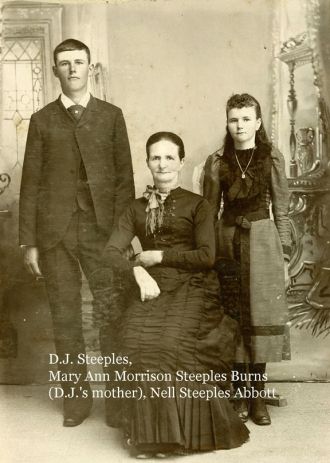
Morrison Family Members
Morrison Family Photos
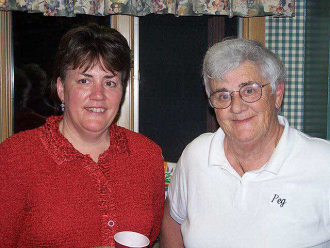
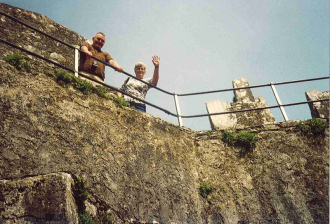
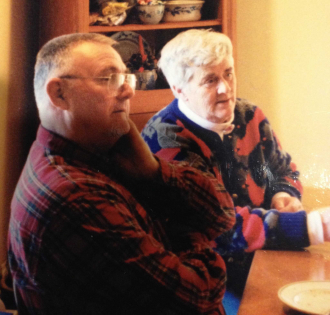
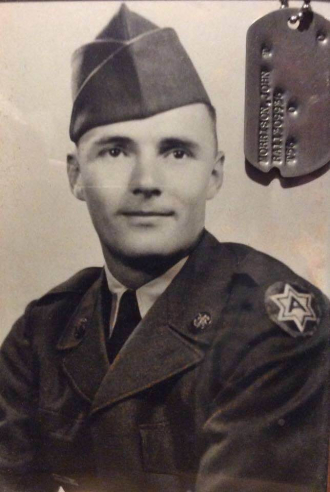
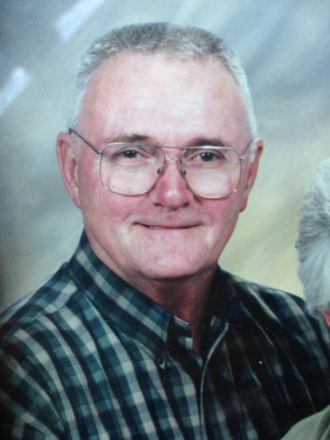
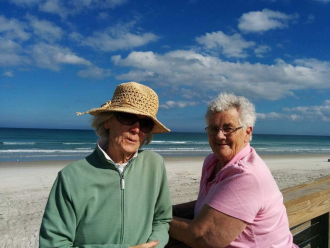
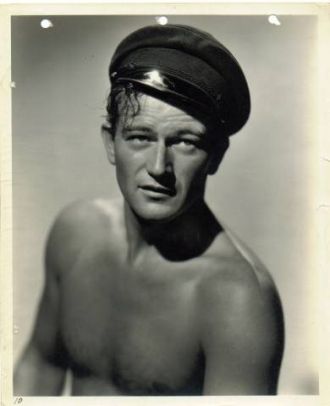
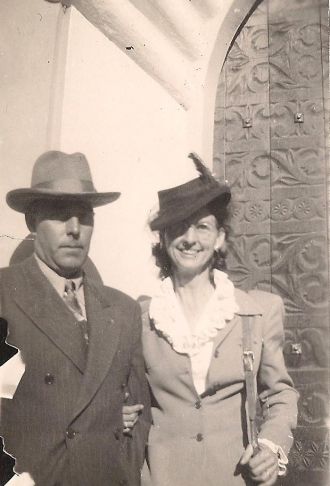
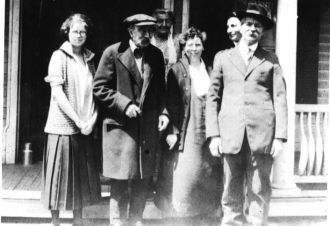
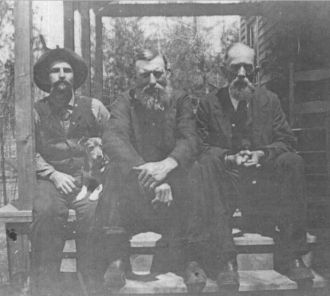
Discover Morrison family photos shared by the community. These photos contain people and places related to the Morrison last name.
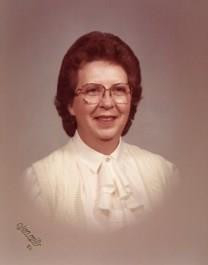

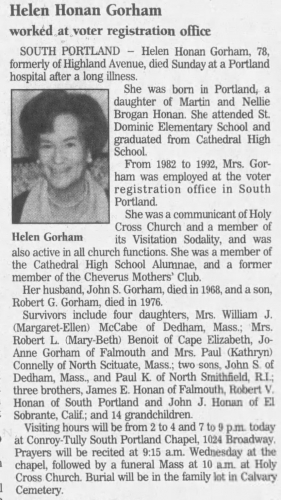

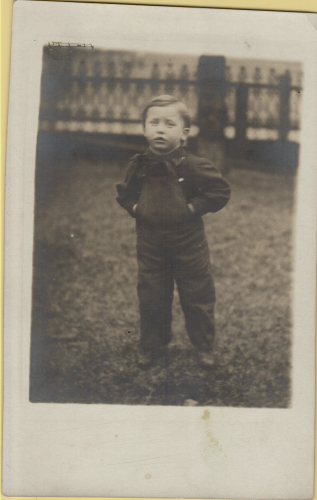





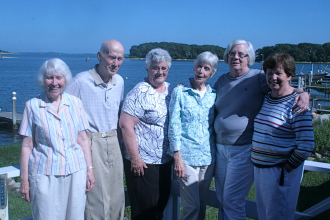
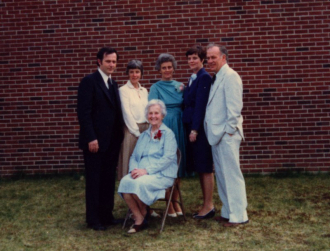




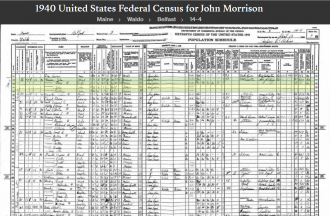
Name John Morrison
Age 6
Estimated Birth Year 1934
Gender Male
Race White
Birthplace Maine
Marital Status Single
Relation to Head of House Son
Home in 1940 Belfast, Waldo, Maine
Map of Home in 1940 Belfast,Waldo,Maine
Street Anderson Street
House Number 56
Inferred Residence in 1935 Belfast, Waldo, Maine
Residence in 1935 Belfast
Sheet Number 7B
Attended School or College Yes
Highest Grade Completed None
Neighbors View others on page
Household Members
Household Members
Name Age
John Morrison 33
Sara Morrison 23
John Morrison 6
Arthur Morrison 45
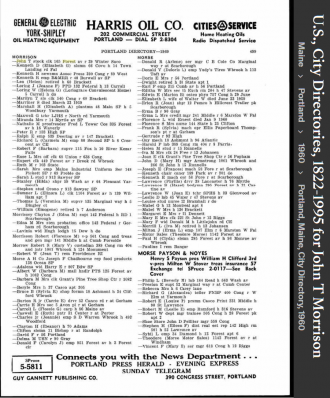
Name: John T Morrison
Residence Year: 1960
Street Address: 39 Winter Saco
Residence Place: Portland, Maine, USA
Occupation: Stock Clerk
Publication Title: Portland, Maine, City Directory, 1960
Morrison Family Tree
Discover the most common names, oldest records and life expectancy of people with the last name Morrison.
Updated Morrison Biographies
Popular Morrison Biographies




Morrison Death Records & Life Expectancy
The average age of a Morrison family member is 73.0 years old according to our database of 45,229 people with the last name Morrison that have a birth and death date listed.
Life Expectancy
Oldest Morrisons
These are the longest-lived members of the Morrison family on AncientFaces.
Other Morrison Records
Share memories about your Morrison family
Leave comments and ask questions related to the Morrison family.
 Deborah Bright Pierce
 About 1835 he started his PRESBYTERIAN Ministry in First ARMAGH Presbyterian Church.Northern Ireland.
In 1845 he moved to DUBLIN and became minister of PLUNKETT STREET Presbyterian Church where he stayed until PLUNKETT STREET chuuch united with one of the other churches in the city.
Simpson married a CATHERINE (Nee HANBIDGE) and they must have had a big family as they were known to have 80 grandchildren.
I wonder if there are any of his Great Great Grandchildren around somewhere.
There was ELIZABETH MORRISON who married Henry Godden,
CATHERINE MORRISON who married JOHN ANGUS
ADA MORRISON Whe Married Rev Dr William Corbett TAIT
JOHN HANBIDGE MORRISON
BENJAMIN MORRISON,
SIMPSON GABRIEL MORRISON (junior)
I wonder were there others? Can you help.
Please contact me.
Thanks, Heather
 Patrick Morrison
 Followers & Sources